Artisan Travels: Seeking Inspiration in Antigua, Guatemala
Antique Stores in an Ancient Town
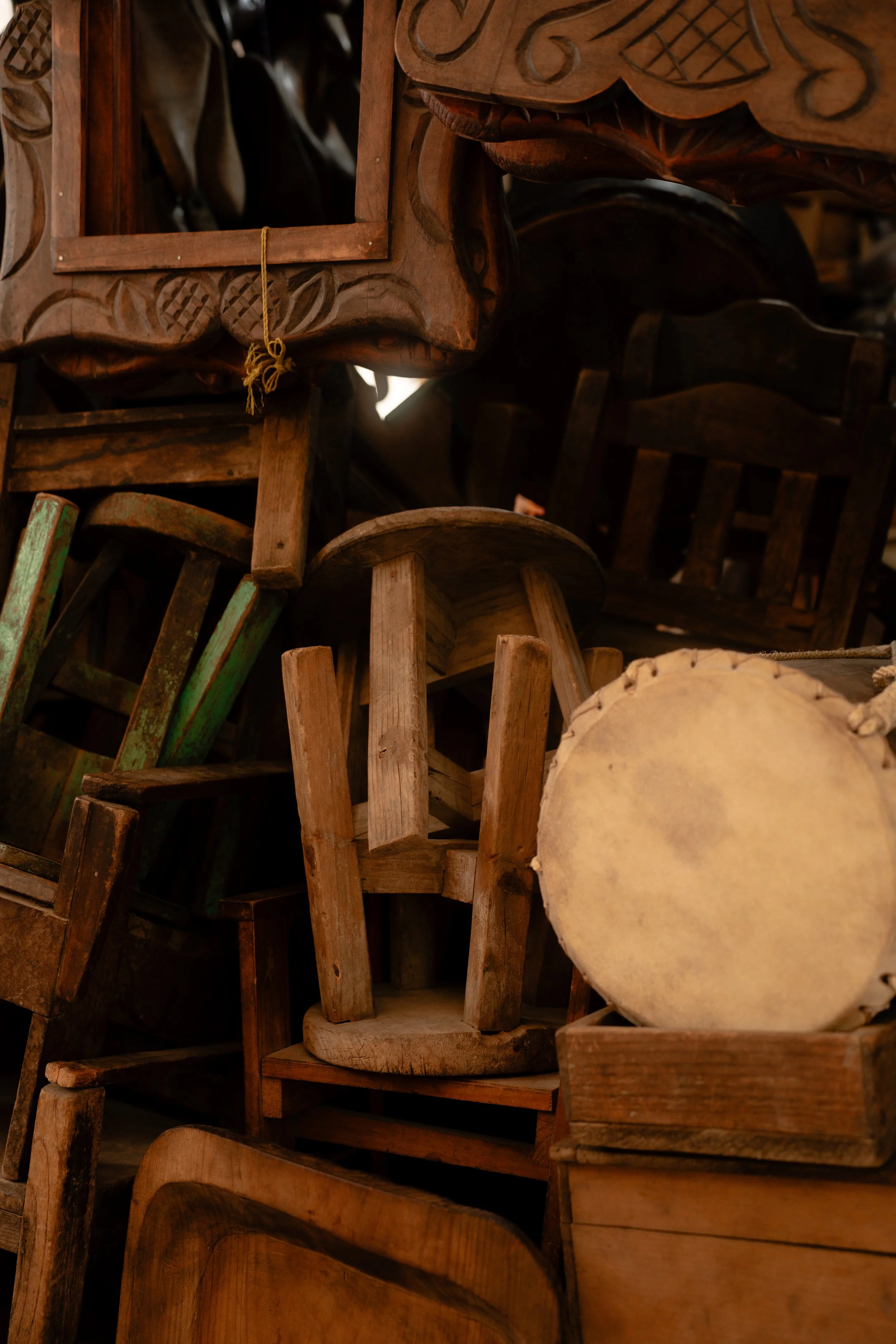
The name Antigua literally means ancient, and the city feels that way in the most magical sense. It has lived many lives, first as the Spanish capital of Central America, later as a place of abandonment after a series of earthquakes, and now as a lovingly preserved UNESCO site. Its antique stores feel like time capsules that allow you to step inside each of those eras.
Walk through their dim and crowded aisles and you find iron door knockers worn smooth by generations, brass candlesticks that once lit haciendas, carved wooden masks used in traditional dances, and fragments of old weaving looms that still hold the quiet imprint of the hands that worked them. You might even come across colonial furniture crafted from native woods, pieces that blend European form with local skill. They are early examples of the cultural exchanges that continue to shape Guatemalan art and design.
I love featuring these shops because they echo what draws me to Antigua as a whole. History is not distant here. It is something you can touch, something that breathes alongside you. As a designer I am always searching for objects that hold stories, pieces that invite reflection, memory, and connection. Antigua offers these in abundance, and yes, these treasures also find their way into my already full suitcase.

Traditional Candy Shops or Dulces Típicos
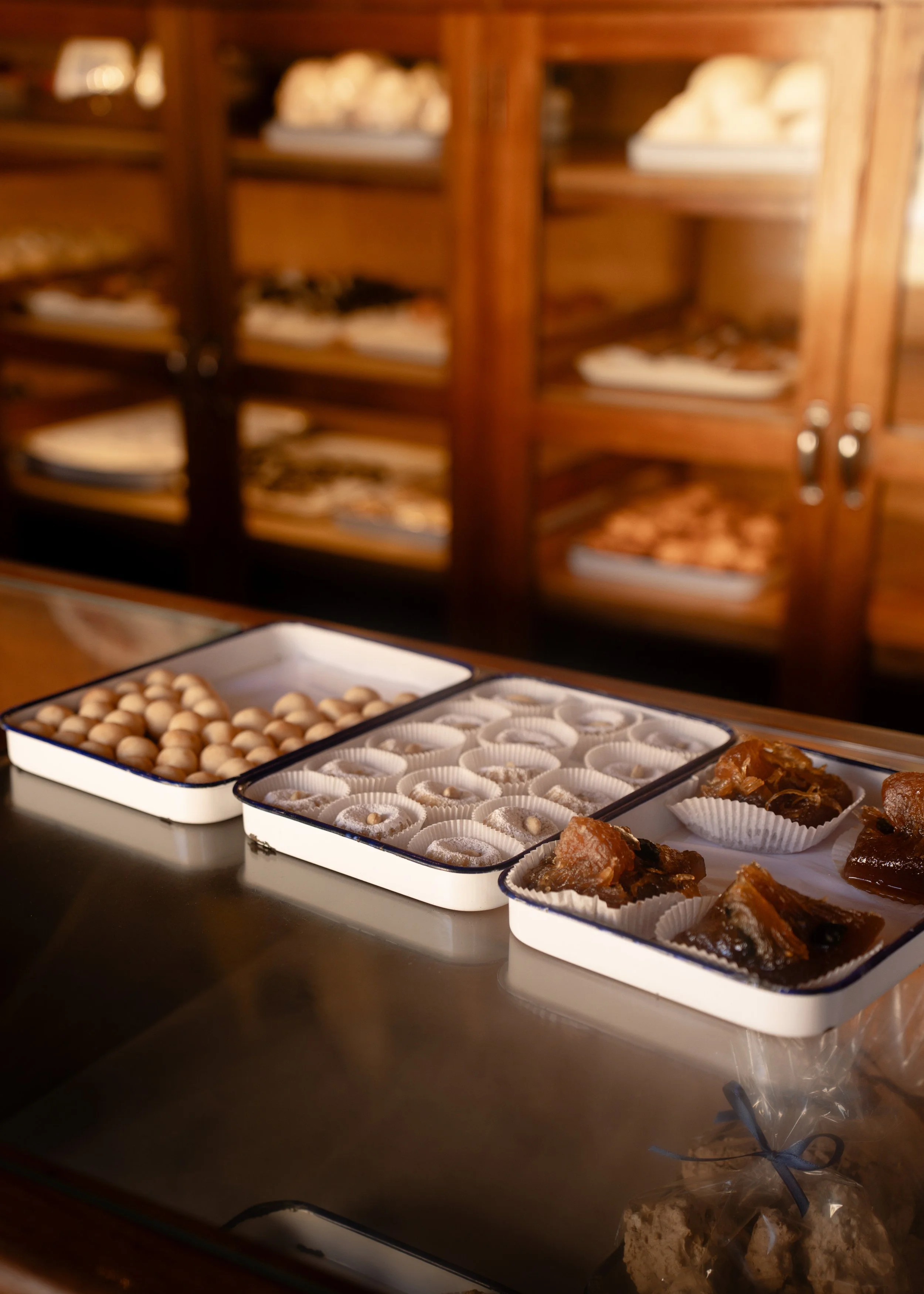
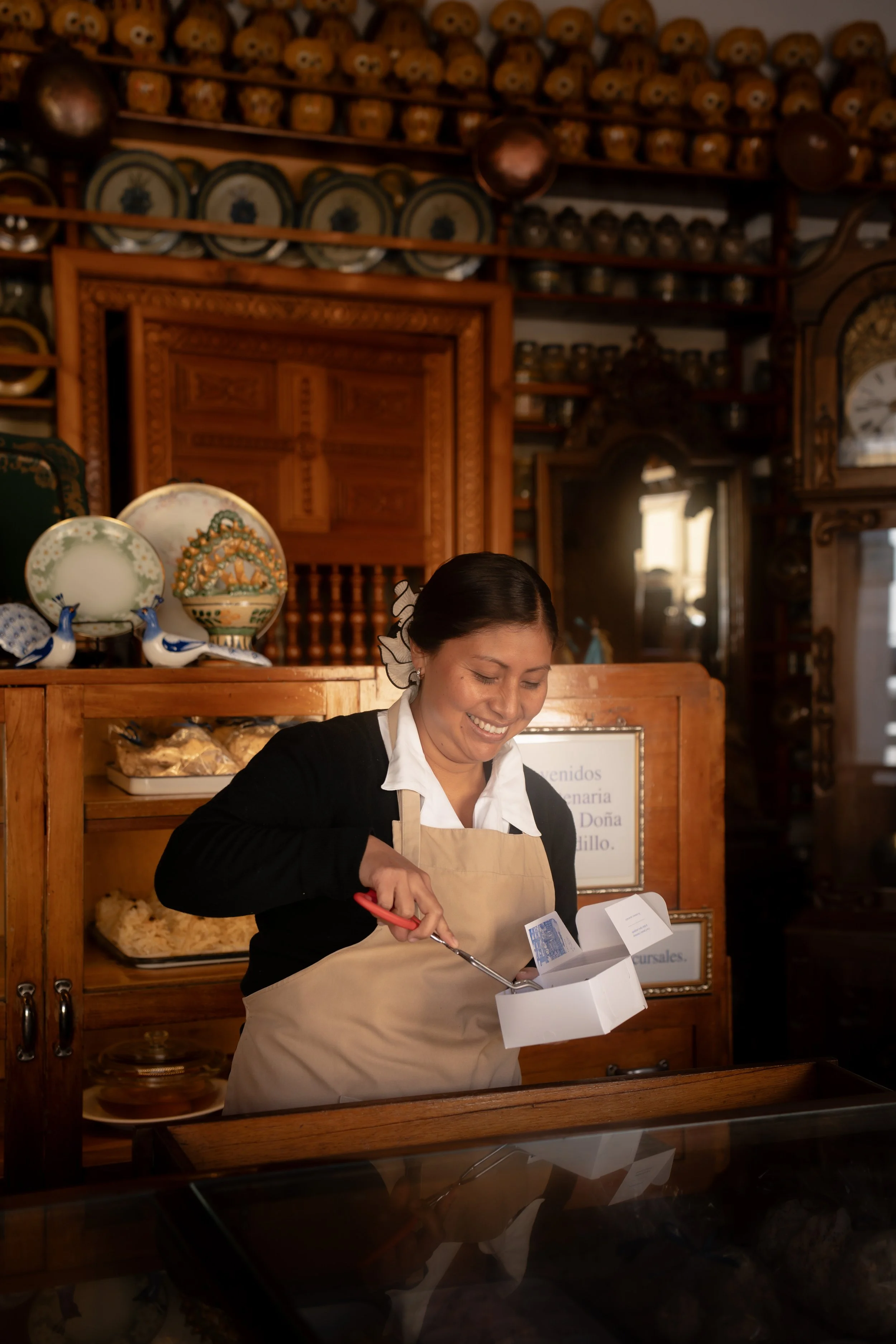
Anyone who has traveled with me knows that my sweet tooth kicks in daily at 3pm. In Antigua, there are two ways to satisfy it. You can step into one of the old storefronts where traditional candies sit behind beautiful glass cases framed in dark, timeworn wood. Or you can find them on the street, sold by local vendors with a few friendly bees drifting nearby. The bees are part of the charm that makes everything here feel alive and connected to the earth.
What I love most about dulces típicos is that they carry centuries of history inside the simplest ingredients. Antigua’s candy making traditions were born in the colonial convents, where nuns transformed local fruits, cane sugar, nuts, and native spices into small celebratory sweets that felt both humble and ornate. Treats like canillitas de leche, mazapán de pepita, and higos en miel were once made for feast days and special occasions, and today they remain a link to Guatemala’s culinary past.
When I bring these candies into my travel stories, it is not just because they are delicious. They represent the continuity of craft, the passing down of recipes and rituals, and the idea that food can serve as a cultural archive. A single bite in Antigua feels like a thread woven between past and present. My suitcase is always bursting with them when I leave.


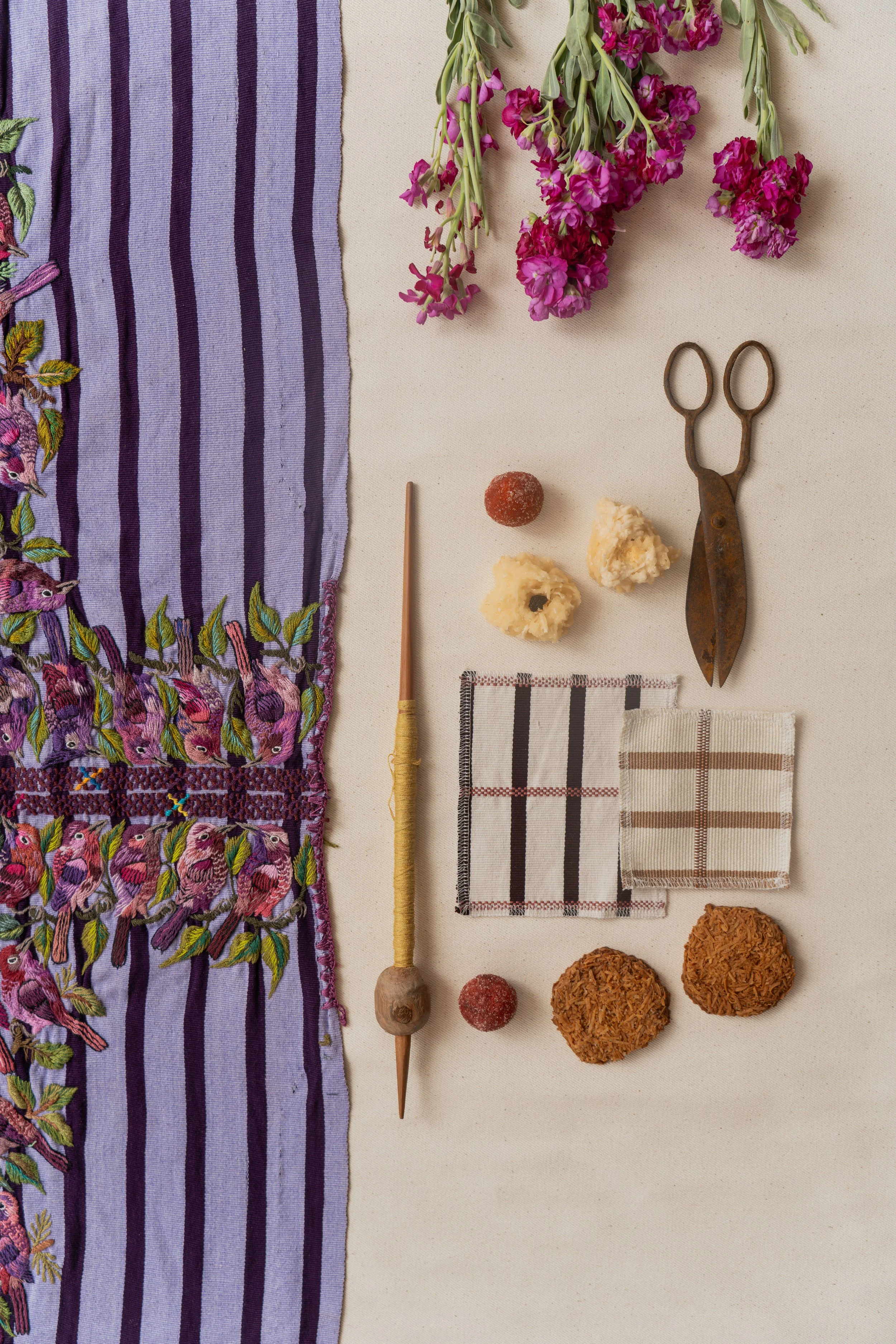
This mood board features a vintage, handmade textile from Santiago Atitlán. We were inspired by the bold stripes used on the traditional huipiles from this town to design the fabrics used on the base of our Pájaro Lumbar Pillow. We also used this design in the napkins for our table setting at Naples Tables.
We found these antique scissors and hand carved thread spindle in the Antigua market along with the beautiful flowers. We chose a few of our favorite sweet treats from Doña María Gordillo.
Textile Stores From Traditional To Modern
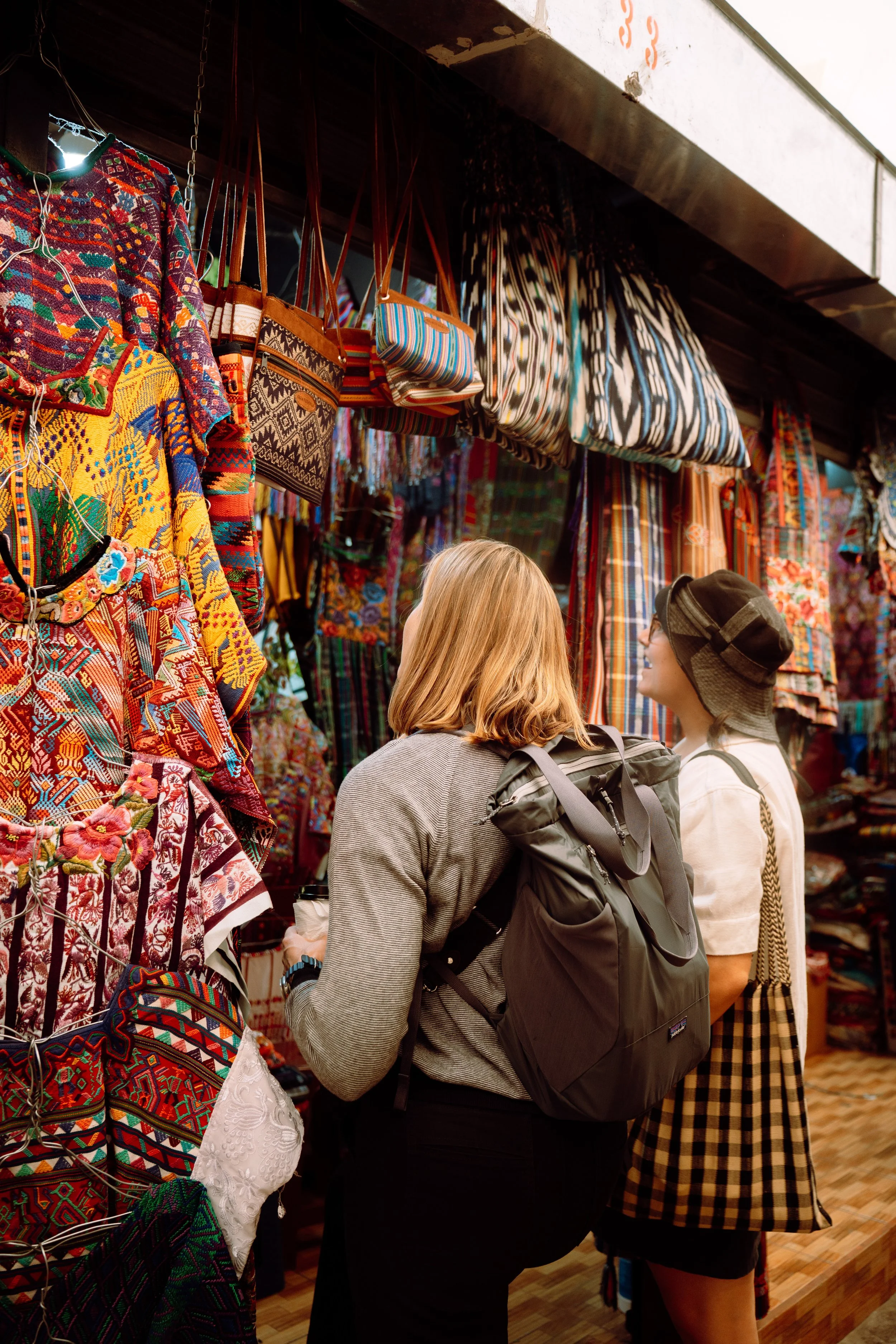
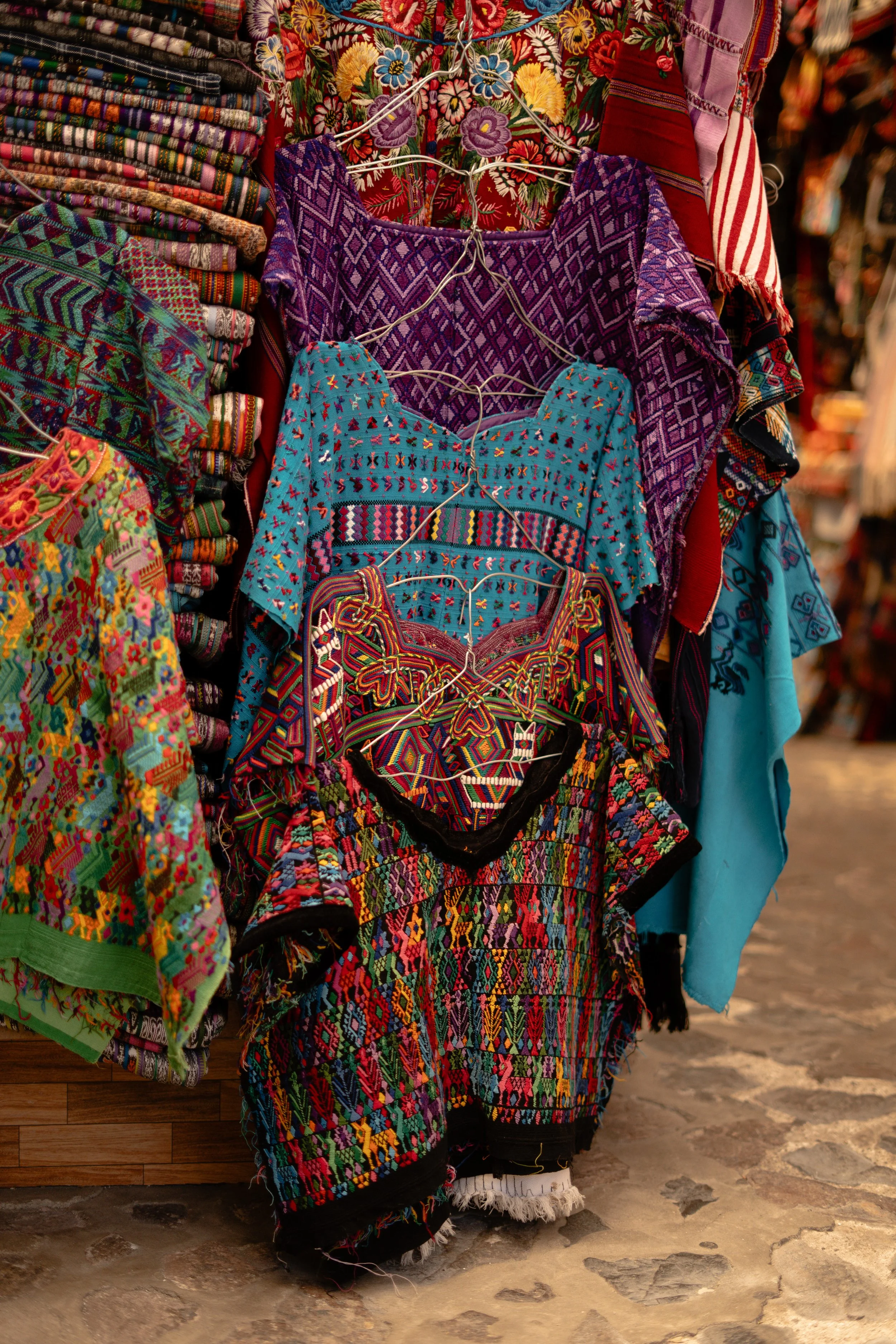
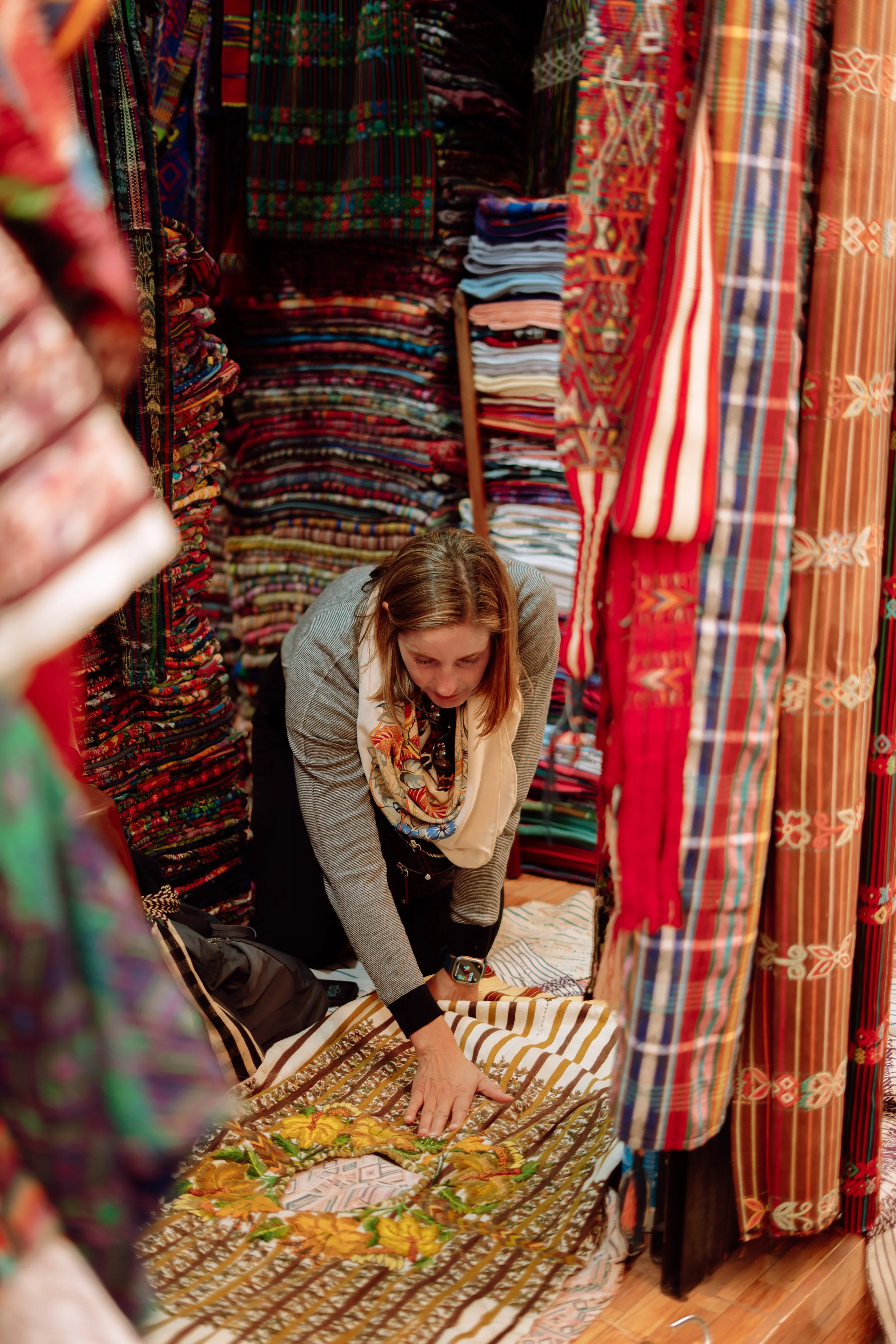
Although the local textile markets in each town are wonderful to visit, I always carve out time to stop into a few small, thoughtfully curated shops when I am in Antigua. They offer a window into the evolution of Guatemalan weaving, where ancestral backstrap techniques meet contemporary interpretations that play with scale, fiber, and color.

In these spaces you find everything from vintage huipiles softened by years of use to brilliantly woven jaspe created on traditional looms. Many pieces carry the visual language of the highlands, where symbols like diamonds, serpents, mountains, and cornfields express protection, abundance, water, and land. Others reinterpret these motifs in modern palettes and patterns, showing how tradition continues to evolve rather than freeze in time.
I feature these places because they reflect the values at the heart of RB Curated. They celebrate the maker’s hand, the preservation of knowledge, and the creative conversation between past and present. They also push my imagination in entirely new directions. Guatemala’s textile diversity is immense, and every visit leaves me inspired with new textures, color stories, and techniques. My suitcase is usually overflowing here too.
0n this trip, we found some pieces to inspire new pillow case colorways coming soon!