

Weaving Before Colonization: Knowledge Passed Through Generations
Weaving has existed in what is now Guatemala for thousands of years, long before colonization. Archaeological evidence, pre-Columbian iconography, and early written accounts show that Maya communities wove on backstrap looms much as they do today. These looms are simple in structure but incredibly sophisticated in use, relying entirely on the weaver’s body tension, memory, and mathematical skill.
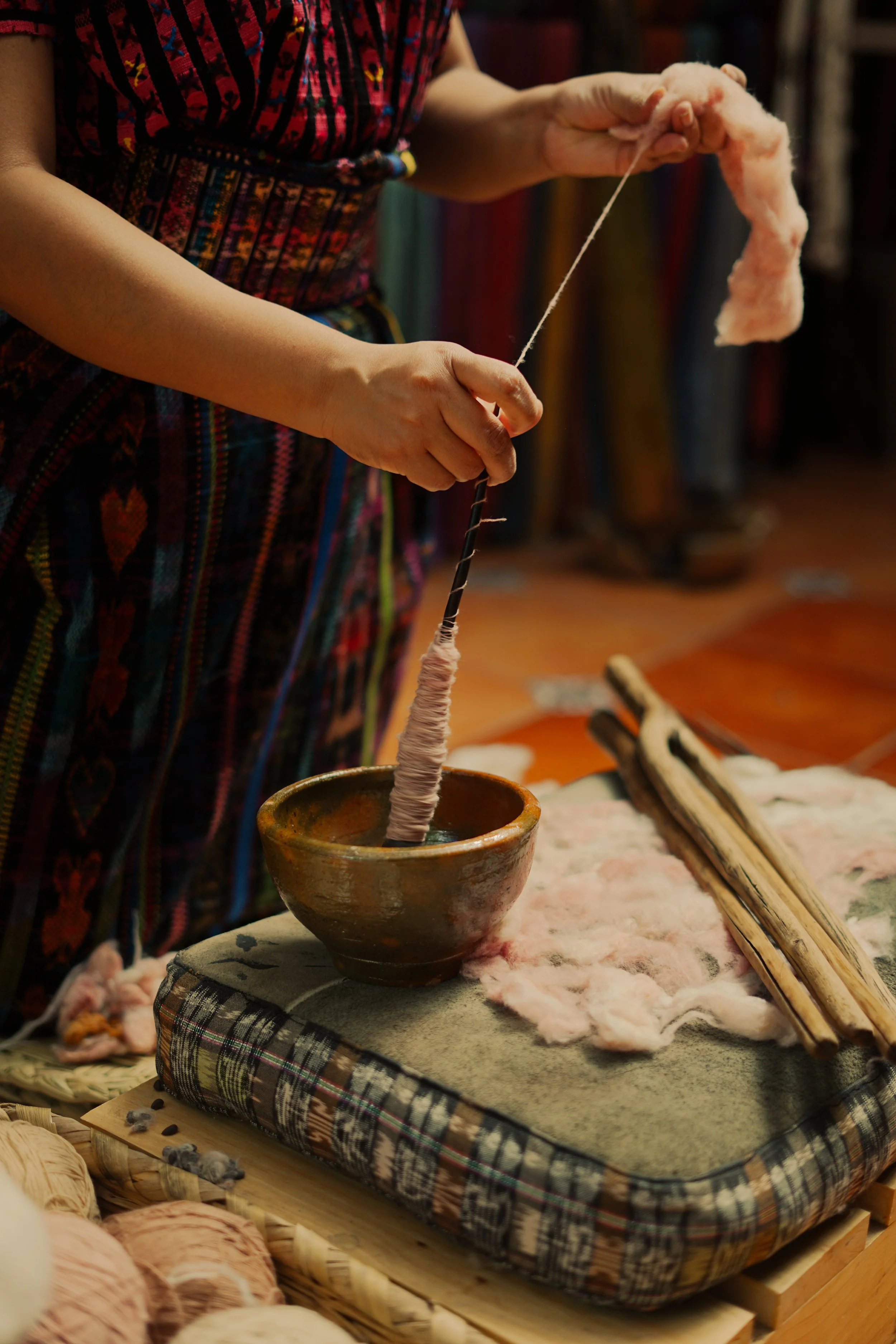
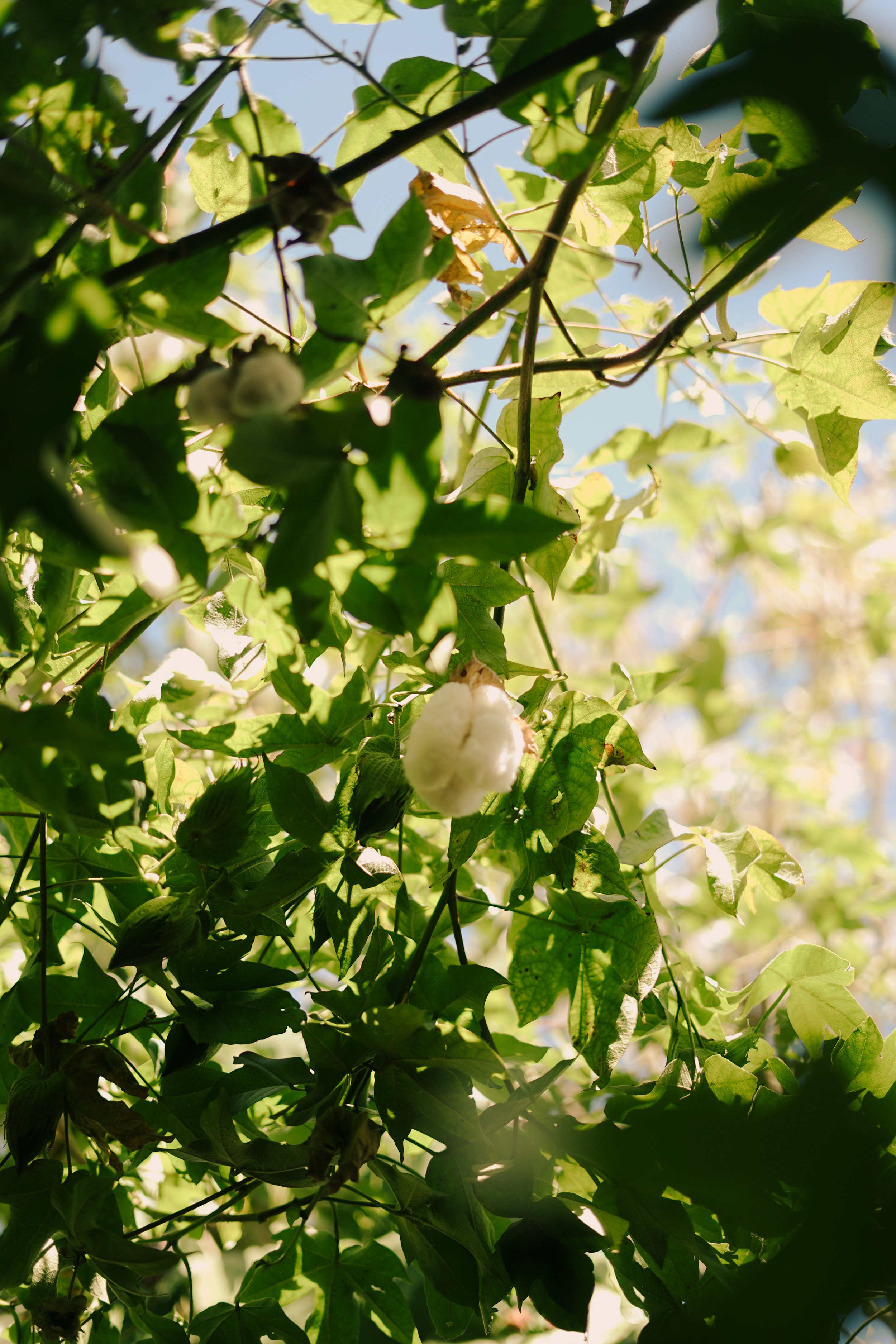
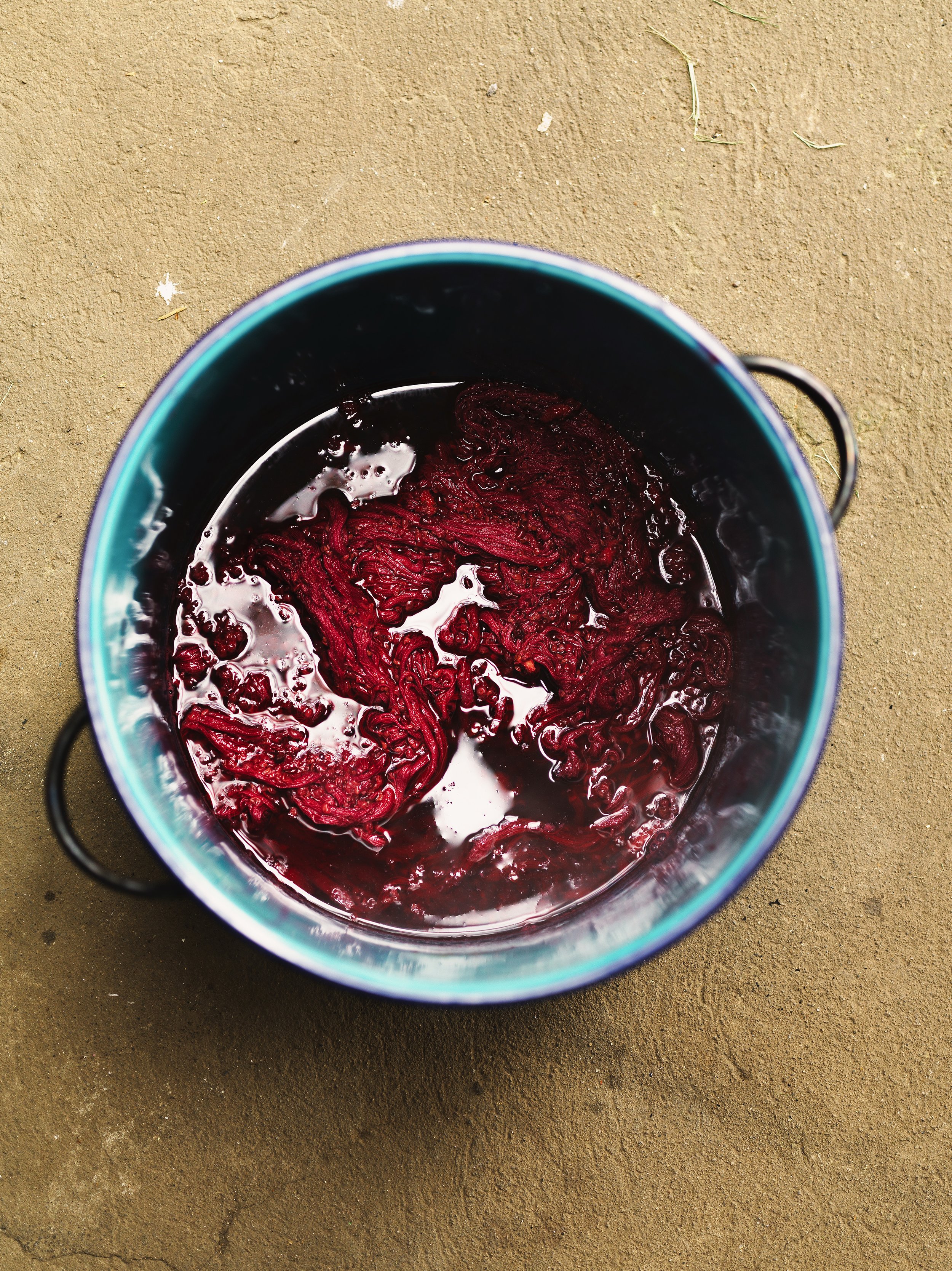
Before colonization, weavers worked primarily with handspun cotton grown locally. Handspun cotton is made by twisting raw cotton fibers by hand, often using a drop spindle, creating thread that varies slightly in thickness and texture. Natural dyes were sourced from plants, minerals, and insects found in the region, including indigo for blues, cochineal insects for reds, tree bark for browns, and local plants for yellows. These materials connected textiles directly to the land and environment where they were made.
Weaving knowledge was passed down generationally, often from mother to daughter, through observation and practice rather than written instruction. Each textile carried not just function, but history, memory, and meaning.

How Materials and Trade Changed Guatemalan Textiles
Colonization and later international trade dramatically changed textile production in Guatemala. Machine-spun cotton replaced much of the handspun cotton, and synthetic dyes introduced a broader, brighter range of colors. Floor looms were introduced alongside the traditional backstrap loom, allowing for wider fabrics and increased production. Today, we continue to honor these expanded techniques by offering signature Artisan Fabric By The Yard that preserves the integrity of the weaver's craft.
Over time, Guatemalan textiles became known globally for their vibrant color combinations and intricate designs. As materials changed, weaving communities adapted, incorporating new threads and dyes while maintaining traditional techniques. Over hundreds of years, these adaptations resulted in distinct regional styles. Today, it is often possible to identify where a textile was made based on its motifs, colors, and structure.
At the same time, local cotton production declined sharply in the 1980s when many commercial farms shifted to palm oil cultivation. As a result, most cotton used today is imported, further distancing textile production from its original material roots.
Why Traditional Weaving Is at Risk Today
Despite its long history, traditional weaving in Guatemala is increasingly at risk. Globalization has made it possible for machines to replicate complex patterns at a much lower cost. These machine-made textiles often appear similar at first glance, making it harder for consumers to understand the difference between handmade and industrial production.
Fast fashion has also had a significant impact. In many communities, imported secondhand clothing and low-cost garments are more affordable than traditional attire, leading to fewer people wearing handwoven clothing in daily life. This reduced local demand directly affects weavers’ ability to earn a living from their craft.
Guatemala’s civil war, which occurred from 1960 to 1996, further disrupted weaving traditions. During this time, it was dangerous for many indigenous people to visibly identify as indigenous. Wearing traditional clothing could make individuals targets of violence or discrimination, leading some communities to abandon traditional dress for safety. The effects of this period are still felt today.

Story Telling Through Weaving - Iconography of Guatemalan Textiles
Weaving as Cultural Identity, Not Just Craft
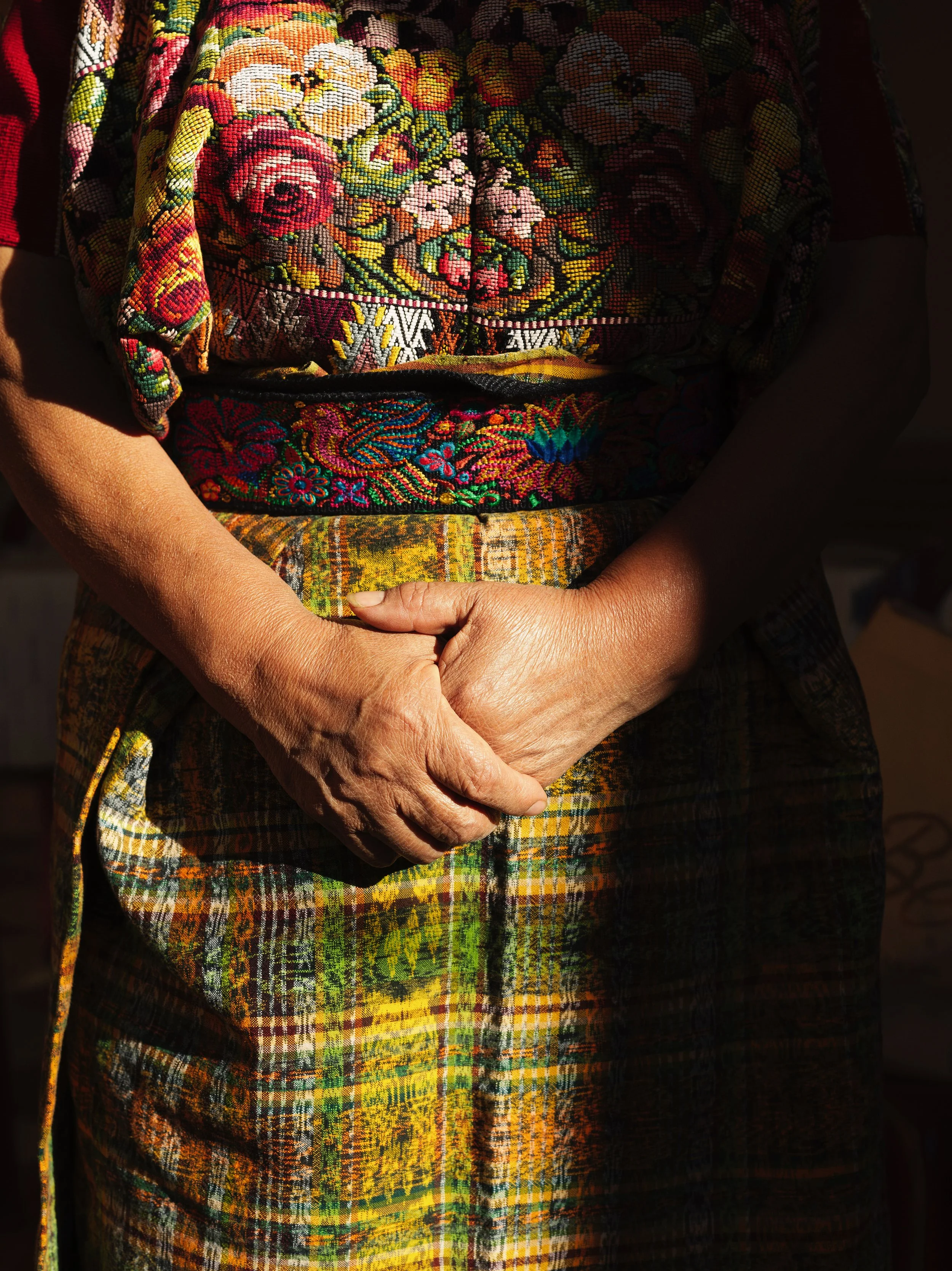
Traditional weaving in Guatemala is far more than a technical skill. Each community has its own techniques, motifs, and symbolic language embedded in the textiles. Designs often represent local geography, spiritual beliefs, community history, and personal stories.
For many weavers, weaving is a way of expressing identity and belonging. The knowledge required goes beyond physical skill and includes mathematics, cultural memory, and intuition. These textiles are living documents, carrying centuries of collective knowledge and individual creativity.
Understanding weaving as cultural identity rather than simply a product is essential to recognizing its true value and why it deserves protection.
Creating Pathways Forward for Future Generations
Today, many weavers face the challenge of supporting their families through weaving alone. As a result, younger generations often seek work in other industries that offer more stable income. However, this does not mean that future generations lack interest in their cultural heritage.
In recent years, indigenous weaving leaders have opened weaving schools and community programs focused on preserving techniques while adapting to modern markets. These initiatives aim to protect traditionally woven designs within each community.
By building thoughtful collaborations, supporting fair compensation, and educating consumers about the value of handmade textiles, weaving can continue to evolve without losing its cultural integrity. Protecting traditional weaving means creating systems where artisans can sustain themselves with dignity, ensuring that this knowledge remains a living practice rather than a lost art.
A Contemporary Path Forward
At RB Curated, our mission is to help ensure this knowledge does not disappear. We work directly with weaving communities to support traditional techniques, material literacy, and fair compensation, while creating thoughtful pathways to contemporary markets. By honoring process, provenance, and people, RB Curated helps keep these traditions alive not as artifacts of the past, but as living practices with a future. Our work is rooted in dignity, continuity, and respect for the hands that carry this knowledge forward.


“Each one-of-a-kind piece is a true luxury; crafted in collaboration with artisans to preserve cultural heritage and time-honored technique.”


