

Why Handmade Will Never Be a Trend

Handmade cannot be trendy because it predates every trend that has ever existed. These are techniques that have been practiced for generations, refined, passed down, and practiced again. They have always been extraordinary. And they always will be, regardless of what the market decides to celebrate this season.

The Difference Between a Moment and a Practice
When something becomes trendy, it gets produced at scale. It gets simplified, cheapened, and replicated until it no longer resembles the original thing that made it compelling.
Handmade cannot be scaled in the same way. A backstrap loom moves at the pace of the weaver's hands. A Falsería pattern requires years of practice to execute with precision. A throw pillow that takes weeks to produce cannot be rushed without ceasing to be what it is.
This is not a limitation. It is the entire point.
Preserving Techniques for the Future
Guatemala's weaving traditions are among the most sophisticated textile practices in the world. They are also vulnerable. When handwoven goods are undervalued, when buyers expect the price of mass production for the work of a master weaver, the economics of the craft become unsustainable. Younger generations seek other industries for work. Knowledge that took centuries to accumulate begins to disappear.
This is not abstract. It is happening. And the antidote is not charity, it is valuing the work correctly, paying what it is worth, and building a market that makes the craft economically viable for the people who practice it.
Every purchase from our collection is a small vote for that market. A quiet but meaningful act of preservation.

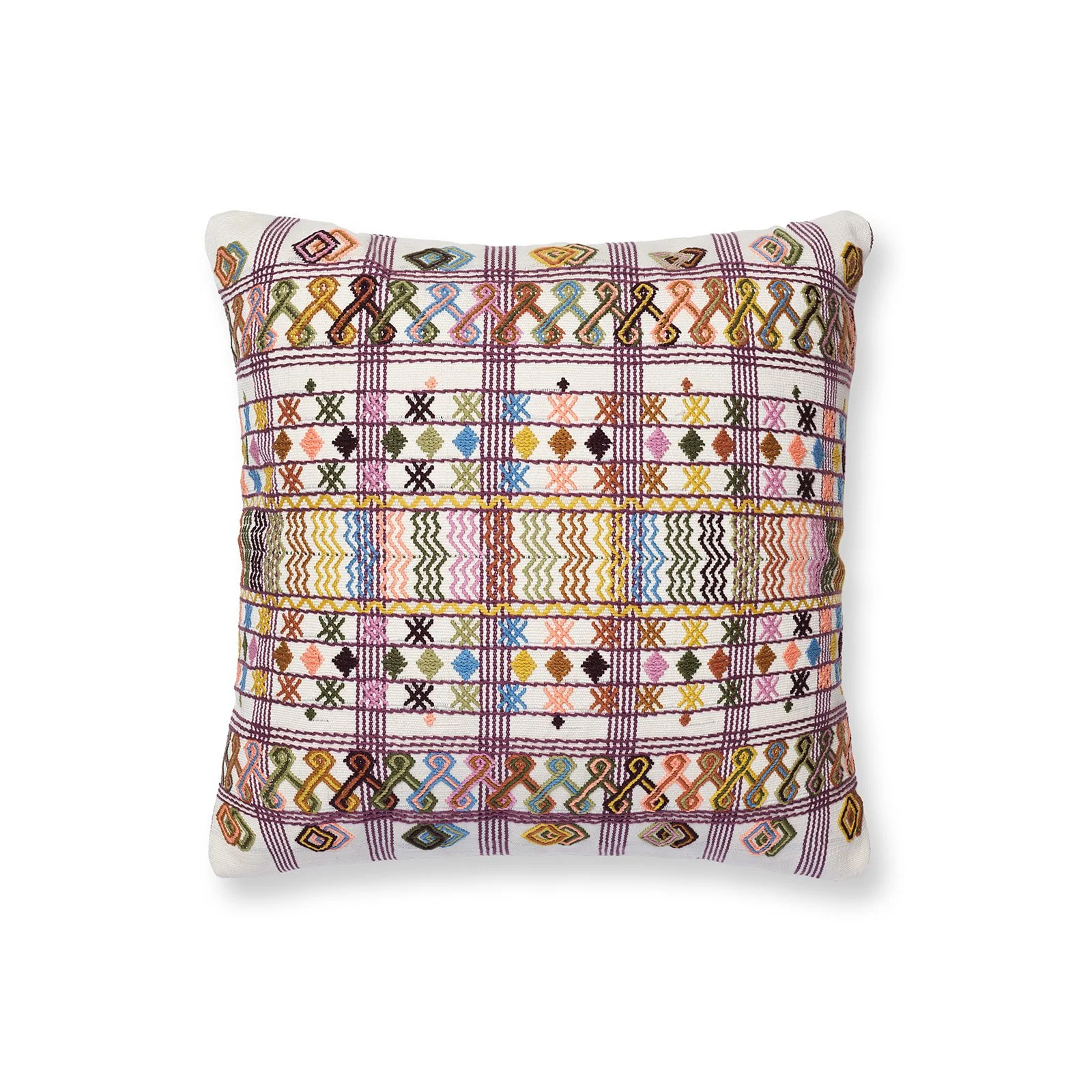
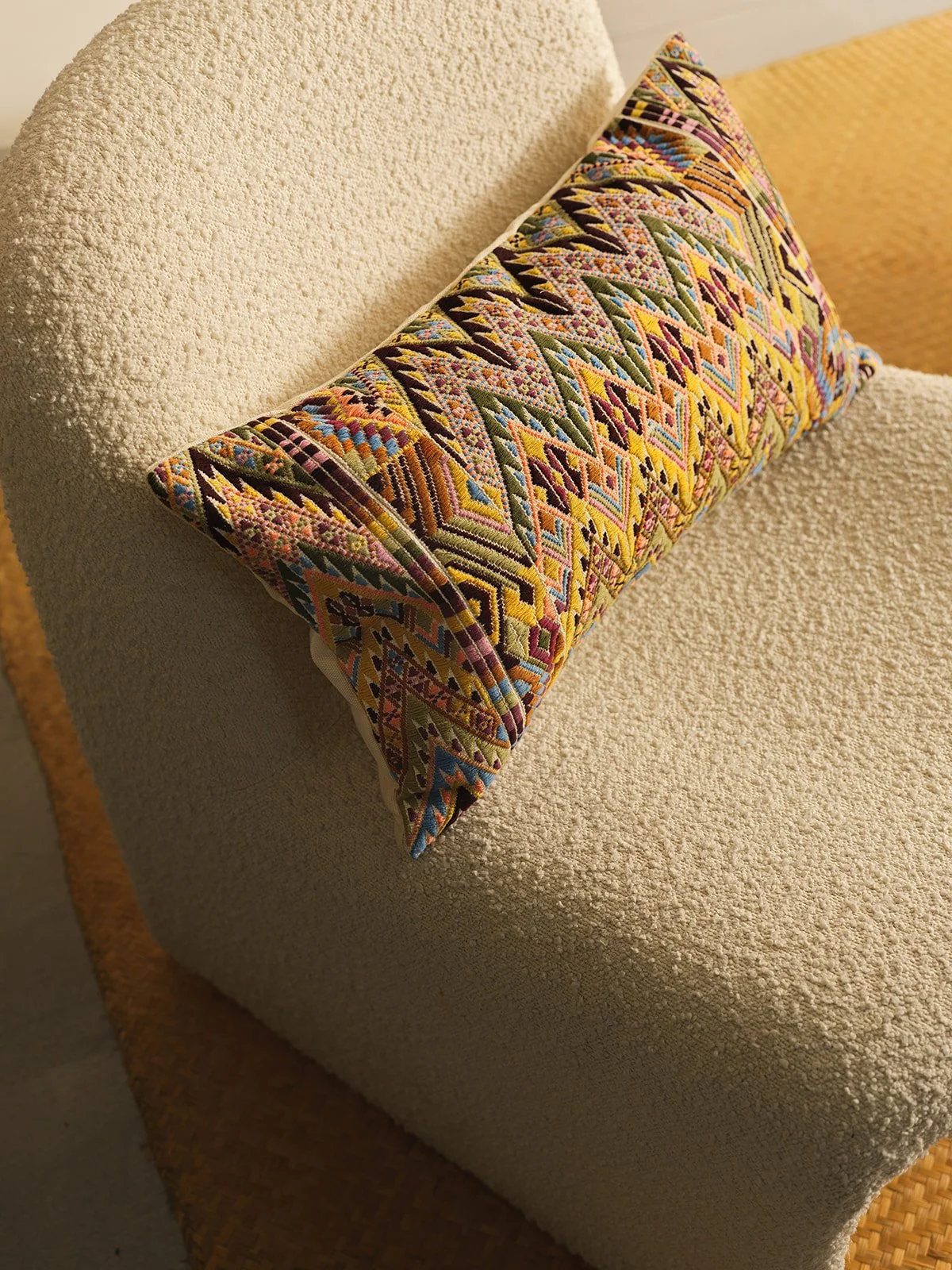
This pillow weaves together a rich tapestry of symbolism, most notably the zigzag motifs that evoked for us the culebra—Spanish for snake. In Maya culture, the serpent holds deep significance as a symbol of rebirth, renewal, and transformation.
Handwoven on a backstrap loom in Santa Catarina Palopó, a village on the shores of Lake Atitlán, the piece reflects a weaving technique unique to this community. The crisscross design is created using supplemental weft threads laid only on the front of the textile, leaving the reverse side nearly thread-free. With every detail visible, the process demands precision and intention—each pillow a visible expression of the artisan’s skill, care, and cultural heritage.
PRODUCTION TIME: 23 Hours
The Inherited Design Intelligence of a Guatemalan Weaver
One of the things that humbles us most about working with Guatemalan weavers is this: they carry an entire catalog of designs in their heads. No pattern books, no software, no reference files. Hundreds of motifs, each one refined over years, revised across generations, and perfected through thousands of hours of practice at the loom.
These designs did not emerge from a trend forecast. They emerged from a deep, living relationship between a community and its natural world, its history, and its identity. They have been tested by time in a way that no contemporary design ever could be.
So when we sit down with the weavers to develop a new colorway or explore a new composition, we are not directing the process. We are in conversation with an expertise that far exceeds anything a design school could teach. The color placement, the rhythm of the pattern, the instinct for what works, that knowledge belongs to them. We are simply fortunate to have a seat at the table.
Why would we chase a trend when we have the honor of partnering with designers like this?




